
On June 24, 2026, an international online webinar titled “Advanced AI Applications for Greening Education: Turning Data into Sustainable Action” was held via digital videoconference, with the active participation of the faculty members from the Turkmen State Architecture and Construction Institute. The event was co-organized by the UNESCO Institute for Information Technologies in Education (UNESCO IITE) and Weidong Cloud Education Group (China). This significant event marked a crucial step within the framework of the joint strategic project "Building Future Schools with ICT Competence and Innovative Pedagogy."
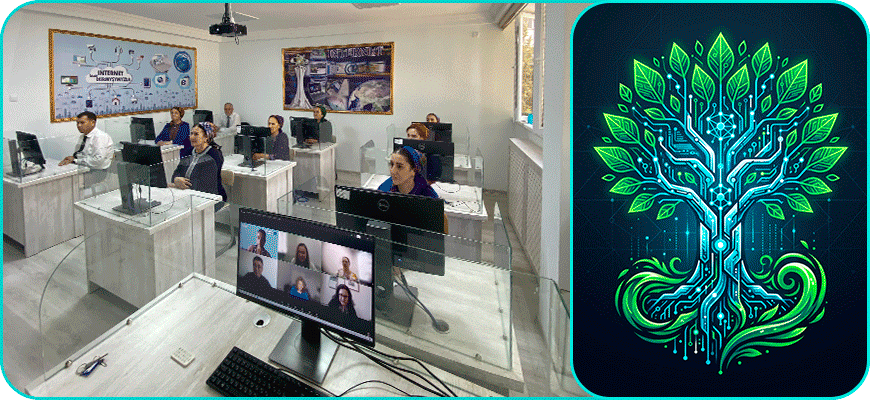
The primary purpose of the webinar was to bridge high-level technological concepts and practical classroom applications, thereby empowering educators to become active agents in fostering sustainable development. Today, demonstrating the practical value of advanced Artificial Intelligence (AI) technologies in solving real-world environmental problems and integrating this knowledge into the curriculum is of paramount importance.
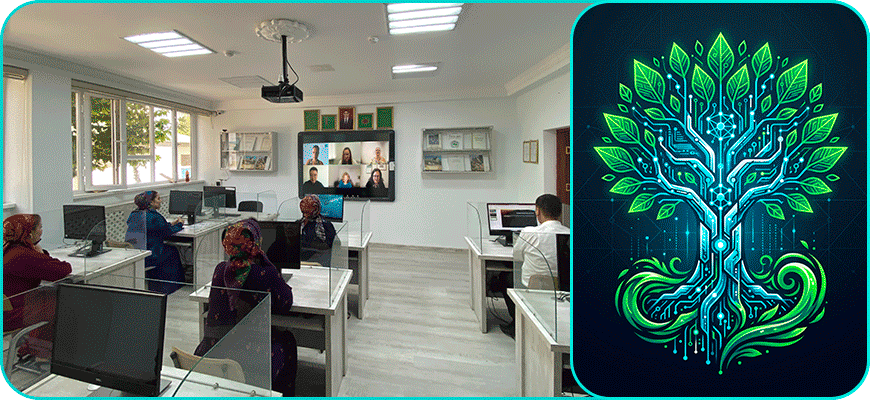
The 75-minute online conference brought together researchers, representatives of higher and TVET (technical and vocational education and training) institutions, curriculum developers, government officials, and leading industry experts in information and communication technologies from all around the world.
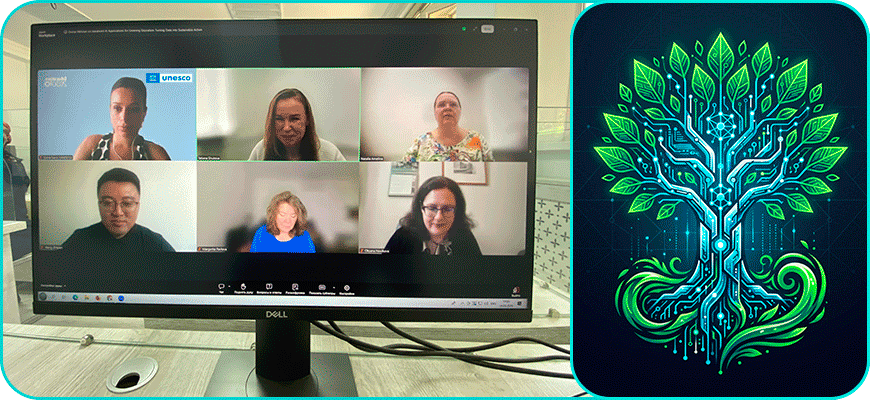
During the conference, educators and education professionals were introduced to the most optimal and engaging ways to explain the capabilities of artificial intelligence in environmental protection. The event focused on the following key objectives:
As part of the webinar, prominent experts from UNESCO Headquarters, the Education University of Hong Kong, and leading higher education institutions from Saint Petersburg and Malaysia delivered insightful presentations. They exchanged valuable experiences on critical topics such as “Greening Curriculum: AI-related opportunities” and “Shaping Sustainable Futures through AI Literacy: Insights from Teacher Education and Practice.”
Furthermore, the panel discussions focused on the practical realities, opportunities, and challenges of integrating digital tools and content into the modern educational environment.
Based on the learning outcomes of the conference, the participants successfully learned to recognize concrete AI applications that address environmental issues, develop ready-to-implement classroom activities or mini-projects, and identify where to find free tools for teachers and open environmental datasets.
At the conclusion of the event, a special resource package was sent to all participants for practical use, including the webinar recording link, slide decks with detailed speaker notes, a resource list of free tools, open environmental datasets, and template lesson plans.
This international webinar proved once again that today's most advanced technologies can serve not only digitization purposes but can also stand as the most powerful tool for raising future generations to be ecologically literate, sustainable, and responsible.
Gulnar TEKAYEWA,
Chief Specialist of the Science Department
at the Turkmen State Architecture and Construction Institute
